
Table of Contents
- 1. Why the Internal Structure Is So Important
- 2. Mechanical Structure: Stability & Impact Protection
- 3. Electrical Safety: Cables & Terminals
- 4. Thermal Management: Triple Temperature Monitoring
- 5. Practical Importance in Application Scenarios
- 6. Lithink Process vs. Conventional Processes
- 7. Summary
- 8. FAQ on Lithink Battery Structure
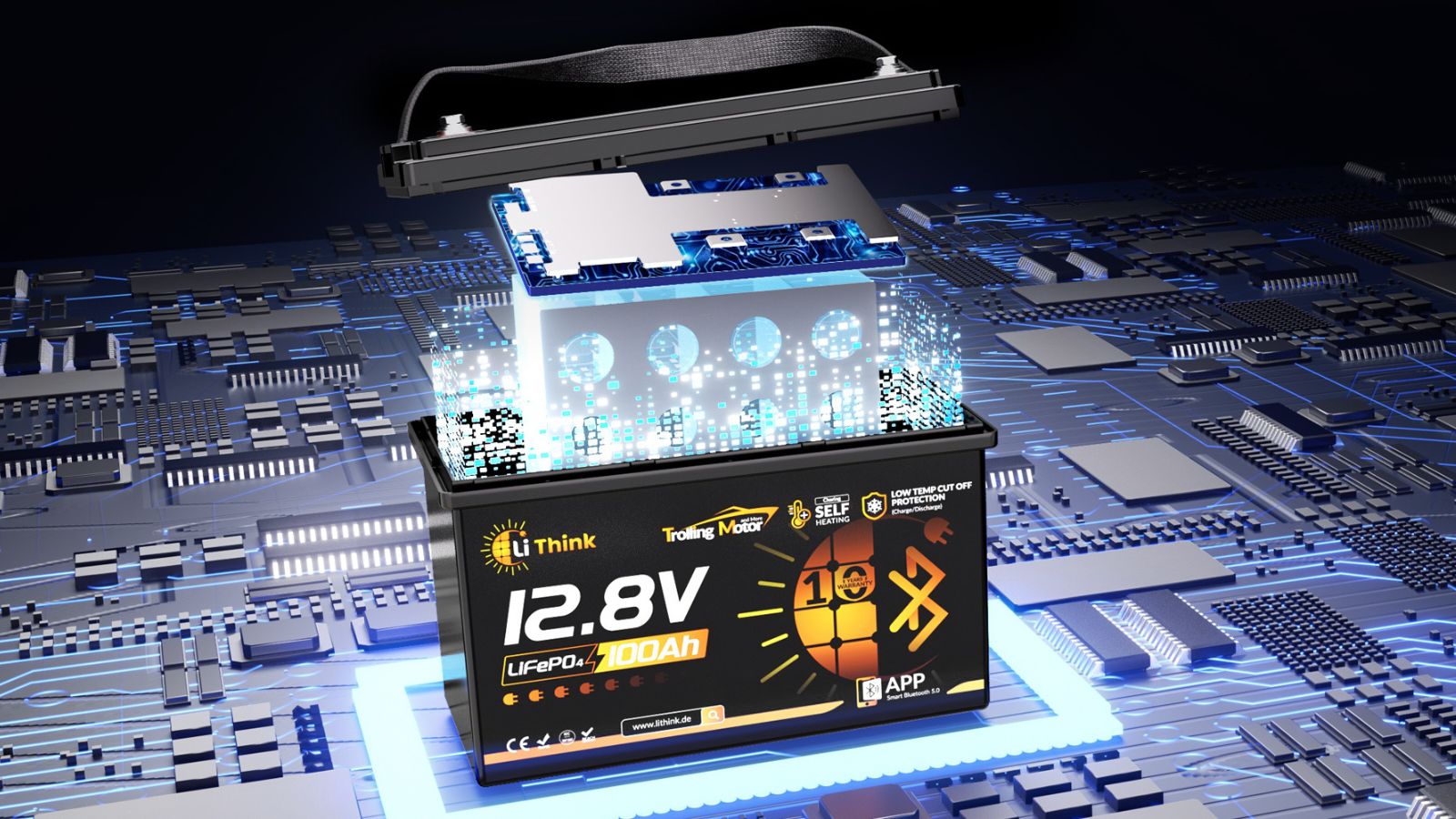
As a core element of energy storage, the performance and safety of a battery depend directly on its internal structure and manufacturing technology. From supports to wiring, from insulation to protection – every detail affects safety, service life, and performance. Based on the internal construction, this article explains which specific measures Lithink implements in the areas of mechanical structure, electrical safety, and thermal management – and what practical value they provide.
1. Why the Internal Structure Is So Important
Many people only pay attention to voltage, capacity, and dimensions when buying a battery. However, what significantly shapes the user experience is often the overlooked internal construction. It determines stability during transport, installation, vibration, and temperature changes – and whether anomalies can be detected and handled in time. A high-quality structure resists external impacts, prevents internal short circuits, improves heat dissipation, and ensures stable operation even under long-term vibration and changing temperatures.
Safety: Material selection, insulation boundaries, and cable protection have a major impact on the risk of short circuits and fire.
Service life & stability: Vibration-resistant fixation, damping, and screw locking determine whether components loosen over time and whether performance remains consistent.
Performance: In scenarios with high load, low/high temperatures, or frequent start/stop operation, the structure determines whether the battery can deliver stable power over the long term.
2. Mechanical Structure: Stability & Impact Protection
Our approach combines strength + insulation + damping + screw locking: high rigidity forms the foundation, complete insulation boundaries provide electrical safety, filling materials absorb impacts, and installation-grade screw locking keeps everything stable over the long term.
Powder-coated sheet-metal frame: High-strength sheet-metal supports stabilize and fix the cell modules, offering better rigidity and higher impact resistance; the coating increases corrosion resistance. Compared with common plastic/steel strap bundling, cell displacement and resulting swelling are significantly reduced.
Six-sided epoxy insulation: Reinforced epoxy sheets are placed between the cells and the housing as a complete insulation barrier; even in the case of slight housing damage, the risk of short circuit is significantly reduced.
EVA filling and damping layers: EVA between the cell block and housing reduces vibration/resonance and absorbs transport and driving impacts.
Screw locking: Thread locker combined with electronic adhesive (“Yellow Glue”) ensures long-term stable screw connections despite vibration.
| Comparison Dimension | Conventional Plastic/Steel Strap Bundling | Lithink Sheet-Metal Frame (Powder-Coated) |
|---|---|---|
| Strength & rigidity | Lower; more likely to loosen/tear under long-term vibration | High-strength sheet metal, higher rigidity, low deformation |
| Impact resistance | Only simple fixation; displacement possible upon impact | Direct protection against external impacts, cells remain protected |
| Resistance to cell swelling | Weak enclosure; swelling is difficult to control | Close fit; reduces swelling-related degradation |
| Corrosion protection | Plastic ages; steel straps may rust | Full-surface powder coating prevents rust on the support |

3. Electrical Safety: Cables & Terminals Fully Protected
Electrical cable routing is the central path for current. Insufficient protection can quickly lead to failures due to abrasion or heat. Lithink applies targeted protection concepts depending on the cable type:
Secondary protection for power cables: The main power cable is protected with a fiber braided sleeve, increasing abrasion resistance and insulation while reducing the risk of sheath damage.
Secondary protection & fixation of sensing cables: BMS voltage sensing wires are wrapped with spiral tubing and fixed with cable ties – this reduces movement-related abrasion and local heat generation, ensuring measurement accuracy and long-term reliability.
Cable management: Defined routing paths and bending radii prevent sharp bends and stress points, reducing fatigue risks.
Terminal protection: Positive/negative terminal covers reduce short-circuit risks during storage, transport, and installation.

4. Thermal Management: Triple Temperature Monitoring
Temperature directly affects charging/discharging safety and efficiency. Single measurement points often underestimate internal gradients – protection strategies may therefore trigger too late or inaccurately. For this reason, Lithink combines multi-point measurement with BMS strategy to detect deviations earlier and respond faster.
Sensor layout: One sensor at the front, one at the back, and one inside the BMS provides a more realistic temperature profile.
Strategic coupling: The BMS evaluates multi-point data and intervenes in time during cold charging or high-load discharge, for example by current limiting or stopping charge/discharge, to avoid overheating or cold-charging damage.
Model adaptation: In models with self-heating, the measurement data also serves as the basis for heating control.
5. Practical Importance
| Scenario | Typical Pain Points | Lithink Solution |
|---|---|---|
| RV | Vibration/impacts during long-distance travel | Impact-resistant sheet-metal support + EVA damping; cells remain firmly fixed. Fiber sleeve protects cables from abrasion. |
| Boat | Moisture/salt spray in coastal environments | Powder-coated support + epoxy insulation prevent rust/short circuits around cells. |
| Solar system | Extreme temperatures, heat/cold | Triple temperature monitoring; BMS regulates charging/discharging currents and prevents overheating or cold-charging damage. |
6. Lithink Battery Process Compared
| Comparison Dimension | Conventional | Lithink Process |
|---|---|---|
| Structural fixation | Plastic straps | Powder-coated sheet-metal frame, higher strength/rigidity |
| Insulation design | Partial/single-sided | Six-sided reinforced epoxy insulation |
| Cable protection | Exposed/simple-sleeve cables | Power cable with fiber braided sleeve; sensing cables with spiral tubing + fixation |
| Wiring harness stability | Higher risk of loosening | Standard-compliant routing/fixation, improved vibration resistance |
| Screw locking | Single locking method | Thread locker + electronic adhesive (“Yellow Glue”) |
| Damping | Insufficient or absent | Full-surface EVA filling for impact absorption |
| Temperature monitoring | Single/few measurement points | Triple sensors: front/back/BMS internal |
| Terminal/connection protection | Exposed/basic | Positive/negative terminals with protective caps for safe transport/storage |
7. Summary
Lithink achieves a consistently reliable solution through strict control of every detail – from the cell to the system. Across the six layers of structural frame, insulation, wiring harness, screw locking, damping, and thermal management, an internal architecture is created for real-world operating conditions. As a result, the battery remains stable, safe, and durable even during long-term operation, high load, temperature changes, and vibration. These invisible yet noticeable details are the source of Lithink reliability.
8. FAQ on the Structure of Lithink LiFePO₄ Batteries
Q1: Why use metal supports instead of plastic straps? Metal supports offer higher strength/rigidity, better resistance to transport and road impacts, and reduce cell displacement or swelling; the powder coating also protects against corrosion in humid/salt environments.
Q2: What effect does six-sided epoxy insulation have? It forms a complete barrier between the cells and the housing; even in the event of housing damage or pressure load, short-circuit and fire risks are reduced – increasing the safety margin.
Q3: Does secondary cable protection really help in daily use? Yes. The fiber braided sleeve on the power cable as well as the spiral tubing + fixation of the sensing cables significantly reduce abrasion, vibration, and insulation breakage risks, lowering the risk of short circuits or measurement errors.
Q4: What advantages does triple temperature measurement provide? Multi-point measurement better reflects the real temperature distribution. The BMS can trigger protection measures, such as cold-charging blockage, current limiting, or shutdown under heat, earlier and more precisely – ensuring safety under high load and extreme temperatures.
Q5: Does EVA filling affect heat dissipation? EVA is used for impact absorption and vibration reduction. Thickness and arrangement are balanced; together with multi-point measurement and BMS strategy, it achieves good overall performance in both vibration protection and thermal behavior.
Share:
Warum LiFePO₄-Batterien im Wohnmobil-System oft nicht voll laden
Battery Bluetooth App: Read LiFePO4 Data & Check Systems