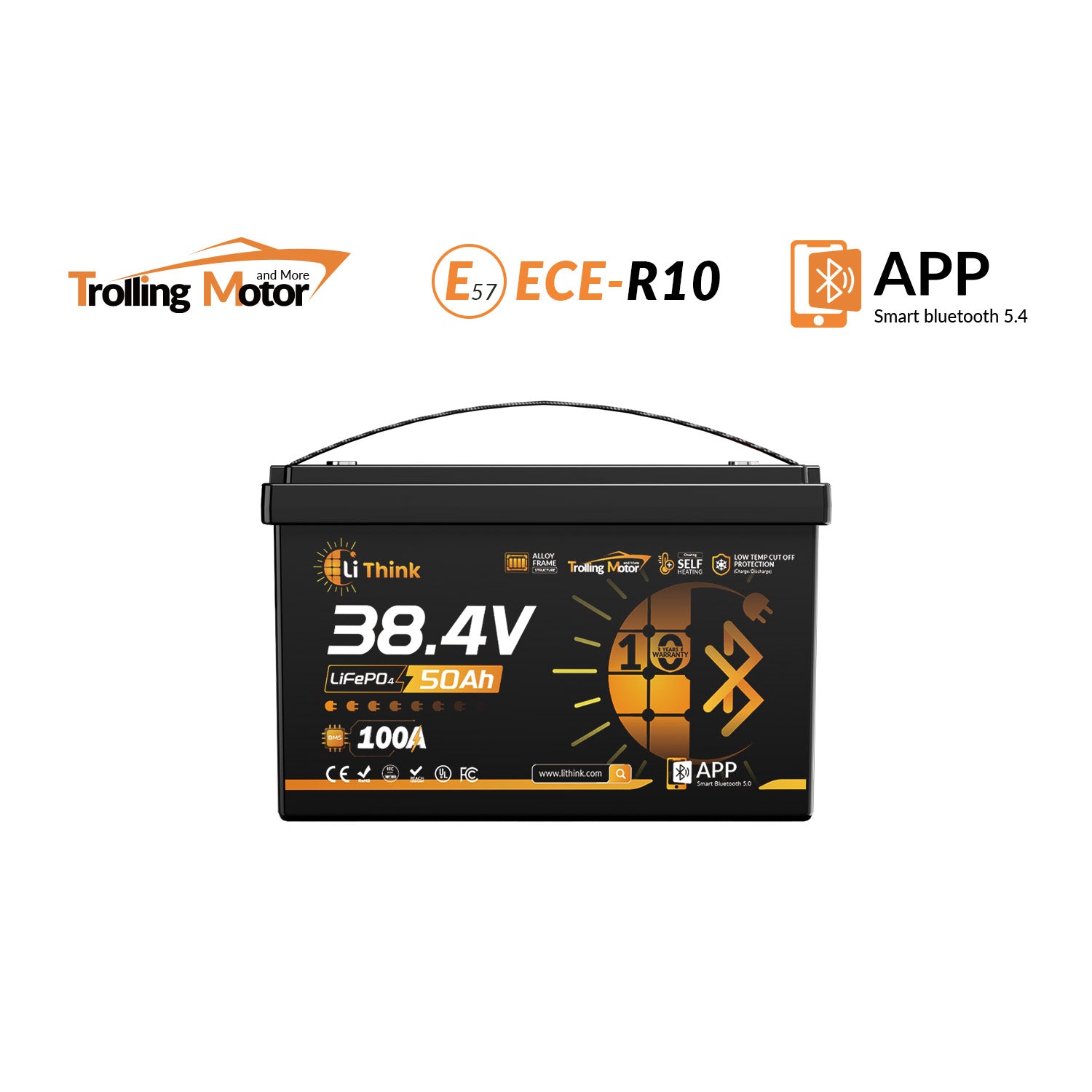
Best LiFePO4 Batteries for Trolling Motors & Boats

How to Choose the Right Battery

for Your Trolling Motor & Boat

A good marine battery is not just about capacity. It should deliver stable output, handle harsh water conditions, protect itself intelligently, and keep you informed while you’re on the water.

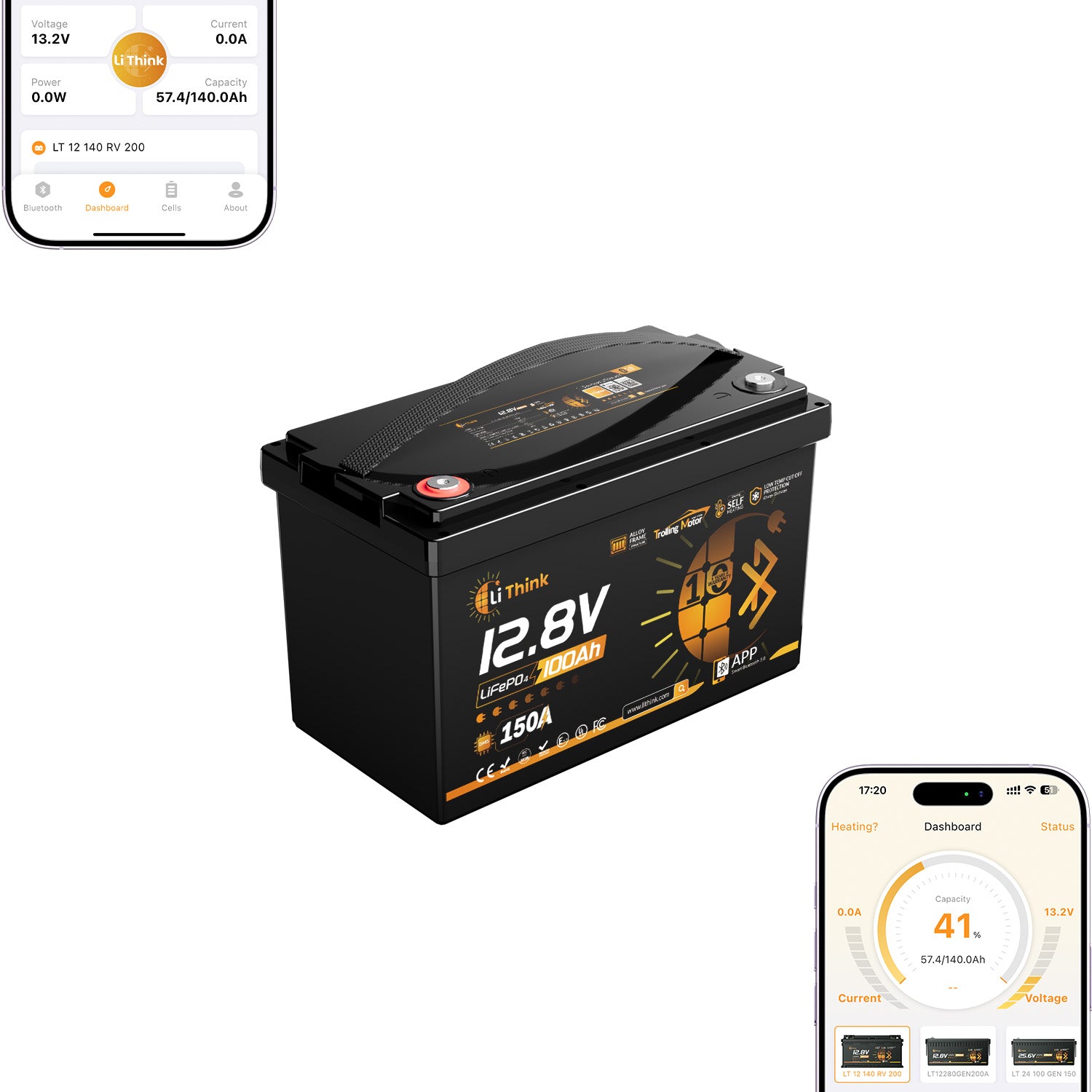
Bluetooth App Monitoring

Check SOC, voltage, current, temperature, and battery status from your phone — before launch, during use, or before heading back.

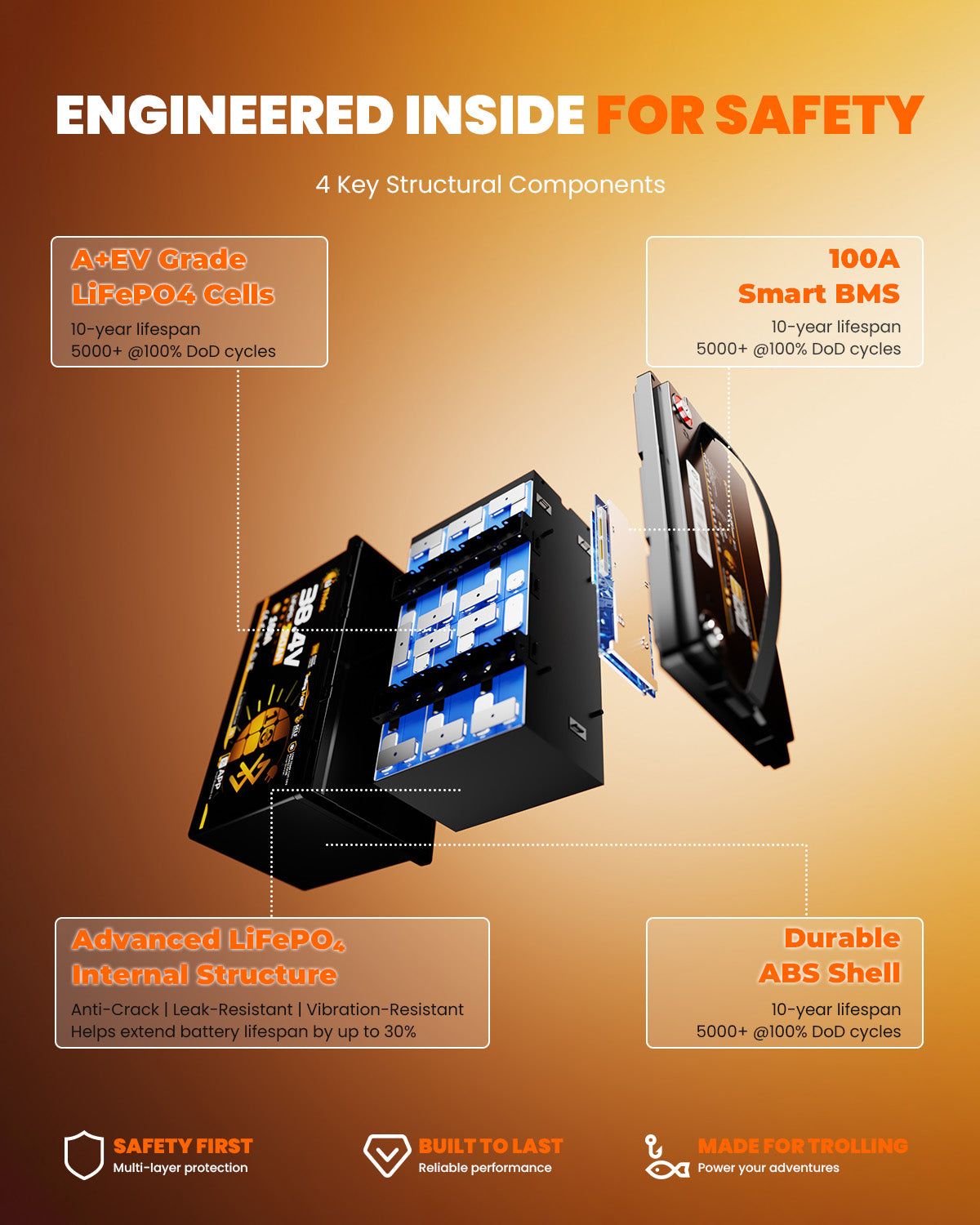
Smart BMS with 30+ Protection Parameters

The built-in BMS monitors key battery conditions and helps protect against overcharge, over-discharge, overcurrent, short circuit, and temperature risks.

Built for Water, Dust & Outdoor Use

Designed for marine environments where moisture, dust, vibration, and temperature changes are part of everyday use.

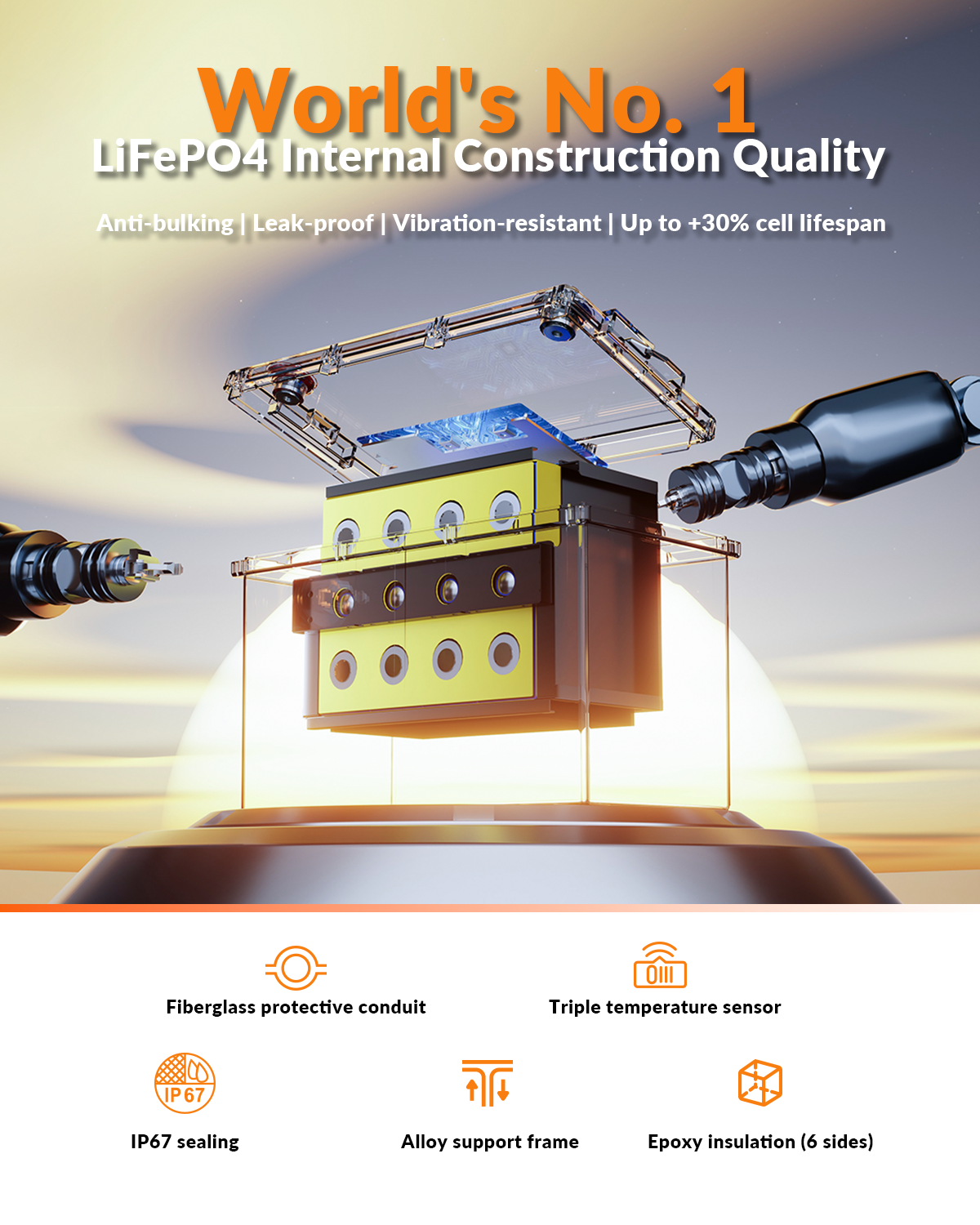
Reinforced Internal Structure

Alloy frame support, insulation protection, and secure internal assembly help improve durability during transport, vibration, and boat movement.

High Surge Output Support

Built to handle short start-up peaks from trolling motors and marine loads, giving your system more current headroom when it matters.

Grade-A LiFePO4 Cells

Reliable lithium iron phosphate cells deliver long cycle life, stable voltage, and dependable deep-cycle performance.

Certified Safety & Quality

Designed with safety, compliance, and long-term reliability in mind for marine, RV, and off-grid power systems.

Tested for Real Marine Use

Every battery is built to support real-world boating conditions — from long fishing days to changing weather and repeated charge cycles.

15000+

Charge & Discharge Cycles

10+

Years Designed Service Life

100%

DoD Deep-cycle usable energy

30+

BMS Protection Parameters

LiFePO4 Batteries for Trolling Motors & Electric Outboards

Choose the right voltage and capacity for your boat, motor, and runtime needs. Whether you need a compact 12V setup or a higher-voltage marine power system, LiThink offers reliable lithium power for fishing, cruising, and electric propulsion.

Sorry, there are no products in this collection.

Continue shopping
Energy (kWh) Typical Power Draw (W) Typical Application Typical Runtime*
Approx. 1.3 kWh Approx. 300 W Small 30–55 lb trolling motor on a fishing or inflatable boat Approx. 3–5 hours
Approx. 2.6 kWh Approx. 250 W 30–55 lb trolling motor + fish finder and lights on a lightweight boat Approx. 6–8 hours
Approx. 2.6 kWh Approx. 500 W 70–80 lb bow-mount motor on an 18–21 ft (5.5–6.5 m) fishing boat at mixed speeds Approx. 4–5 hours
Approx. 5.1 kWh Approx. 500 W 70–80 lb bow-mount motor + onboard electronics (cooler, fish finder, lights) Approx. 8–10 hours
Approx. 3.8 kWh Approx. 800 W 36V bow-mount motor with approx. 112 lb thrust on a heavier bass or predator boat Approx. 4–5 hours
Approx. 7.7 kWh Approx. 800 W Same powerful bow-mount motor with frequent Spot-Lock use in heavy wind/current Approx. 8–9 hours
Approx. 5.1 kWh Approx. 300 W House power for cooler, lights, pumps, and navigation on a smaller powerboat or sailboat Approx. 12–16 hours
Approx. 10.2 kWh Approx. 400 W House battery system on a cabin cruiser (cooling, lights, electronics, chargers) Approx. 20–24 hours
*Actual runtime may vary depending on boat weight, wind, and water currents.
System Voltage Recommended Capacity (Ah) Typical Motor / Boat Runtime at Medium Power*
12 V 100 Ah 30–55 lb trolling motor on a small fishing / inflatable boat Short trips up to about half a day of fishing
12 V 200 Ah 30–55 lb trolling motor + fish finder/cooler on a light to medium boat Typically a full day of fishing
24 V 100 Ah 70–80 lb bow-mount motor on an 18–21 ft fishing or sports boat Intensive short to half-day trips
24 V 200 Ah 70–80 lb trolling/bow-mount motor + basic house power (electronics, lights) A full day on the water
36 V 100 Ah 36V bow-mount motor with approx. 112 lb thrust on a 20–23 ft bass or predator boat Several hours, typically half-day use
36 V 200 Ah Heavily motorized fishing boat with frequent Spot-Lock use in wind/current An intensive day of fishing
48 V 100 Ah 48V electric outboard (≈ 4 kW) on a lighter cabin cruiser or sailboat Harbor maneuvers + shorter trips, half day
48 V 200 Ah Same motor for day trips with cruising and drifting phases on 6,000–8,000 lb boats Typical day trip with mixed use
*Estimated values based on average consumption data.
Total Boat Weight (lbs) Boat Length (ft) Minimum Thrust (lbs) Recommended Voltage
≤ 1,500 lbs ≤ 14 ft Approx. 30–40 lbs 12 V
1,600–2,600 lbs 14–17 ft Approx. 40–55 lbs 12 V
2,600–3,500 lbs 17–18 ft Approx. 70–80 lbs 24 V
3,500–4,600 lbs 18–19 ft Approx. 80–90 lbs 24 V
4,600–5,500 lbs 20–23 ft Approx. 112 lbs 36 V
5,500–9,900 lbs 24–28 ft Approx. 112 lbs 36 V
6,600–8,800 lbs 26–33 ft Approx. 190–200 lbs 48 V
8,800–13,200 lbs 33–39 ft Approx. 190–200 lbs 48 V
*Thrust requirements may vary depending on water conditions, hull design, and typical payload.

Power More Electric Outboards with LiThink

From upgrading a gas outboard to building a fully electric boat setup, LiThink provides reliable LiFePO4 power for many popular electric outboards and trolling motors. Choose the right voltage and capacity for your motor, boat size, and runtime needs — and enjoy quieter, cleaner, low-maintenance power on the water.

Questions About Boat Batteries?

Q1: How do I make sure the battery matches my trolling motor?

A: Start with your trolling motor voltage. A 12V motor needs a 12V battery, a 24V motor needs a 24V system, and a 36V motor needs a 36V battery or battery bank. Then check your motor’s current draw, thrust rating, and recommended battery capacity. For the best performance, choose a battery with enough continuous output and surge support for your motor.

Q2: How do I choose the right capacity for my motor and onboard devices?

A: Capacity is measured in amp-hours. A higher Ah rating usually means longer runtime. If you only power a small trolling motor for short trips, a lower capacity battery may be enough. If you run a trolling motor, fish finder, lights, pumps, and other onboard devices, a higher-capacity battery is usually the better choice.

Q3: Should I use one battery for everything or separate batteries for motor and electronics?

A: For best reliability, many boat owners use separate power systems: one battery for the trolling motor and another for electronics or house loads. This helps prevent the motor from draining power needed for fish finders, lights, pumps, or safety equipment.

Q4: What should I look for in a marine LiFePO4 battery?

A: Look for strong BMS protection, enough continuous current, surge output support, water and dust protection, reliable cell quality, Bluetooth monitoring, and low-temperature protection. For marine use, durability and protection matter just as much as capacity.

Q5: Does cold weather affect battery choice?

A: Yes. Cold weather can affect charging and available performance. A battery with low-temperature protection helps prevent unsafe charging in freezing conditions. Self-heating models are especially useful for cold mornings, winter storage, and fishing in colder regions.

Not Sure Which Trolling Motor Battery Fits Your Boat?

Tell us your motor voltage, thrust rating, boat type, and expected runtime. Our team can help you choose a suitable LiThink battery setup.