
Table of Contents
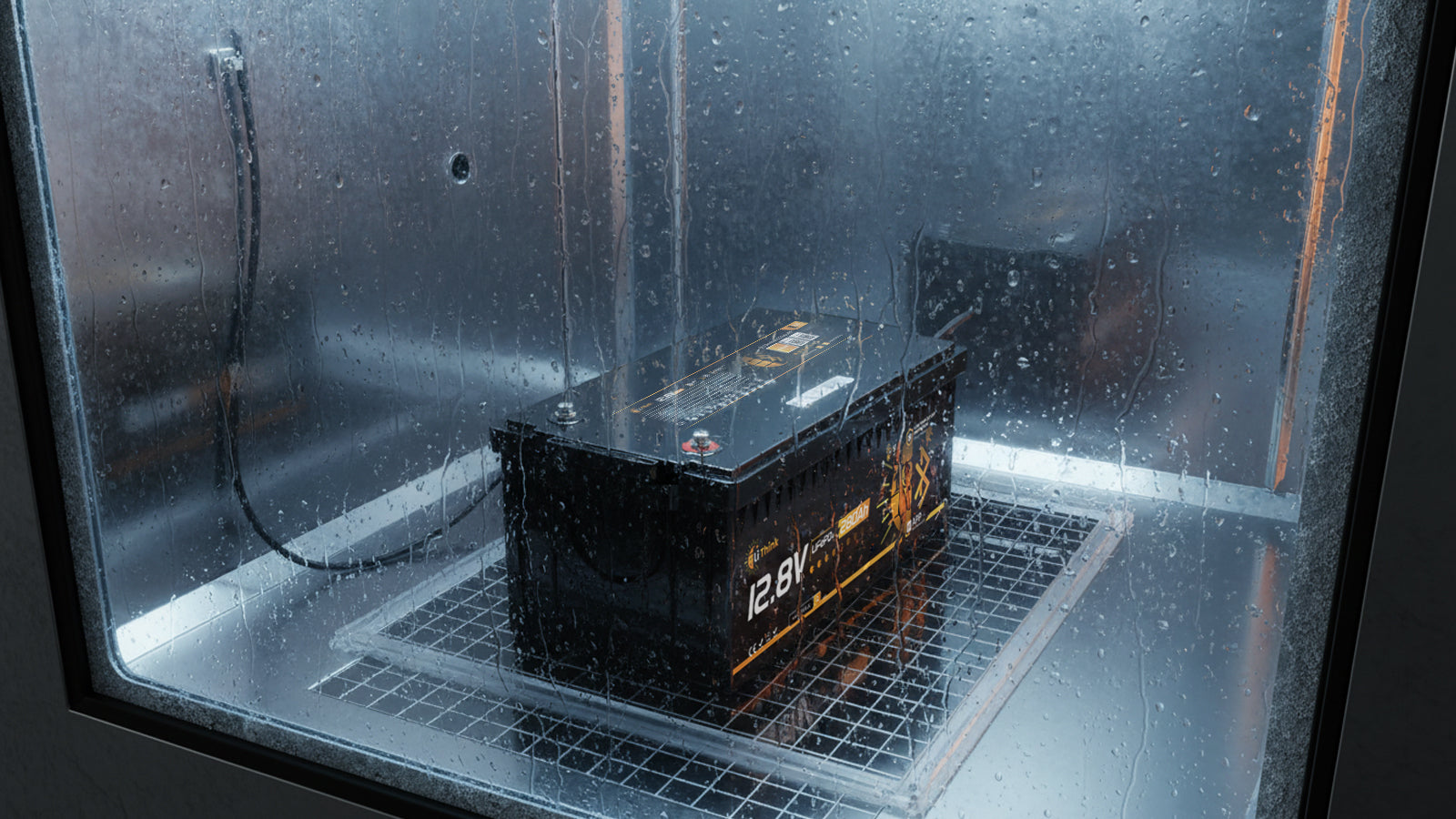
Many users underestimate the issue of moisture and do not realize what impact moisture, rain, or high humidity can have on batteries. What happens when a lithium battery gets wet? And how can this be prevented? This article analyzes causes, common scenarios, concrete measures, and effective protection solutions.
1. Why Is Moisture a Serious Problem for Lithium Batteries?
A lithium battery consists of cell(s), a BMS protection/management system, electrolyte, metal connectors, and housing — all components are sensitive to moisture:
Cell: Water vapor can enter the packaging and trigger abnormal chemical reactions.
Electrolyte: Contact with water accelerates decomposition and reduces activity.
BMS circuit board: Moisture promotes short circuits or leakage currents.
Metal terminals: After moisture exposure, they oxidize/corrode — contact resistance increases.
Moisture not only affects performance but can also directly endanger safety. If water enters the packaging, it reacts irreversibly with the internal material systems.
2. What Risks Arise When the Battery Gets Wet?
Internal short circuit & electrical faults: Water can create conductive paths between circuit traces/cells and trigger short circuits. A BMS provides protection, but persistent moisture can cause overheating or electronics damage.
Performance loss & shortened service life: Increased contact resistance leads to faster voltage drop; capacity degradation accelerates and usable time shrinks. Frequent abnormal cycles can shorten life expectancy by years.
Corrosion of metal components: Terminals, solder joints, and copper traces rust/oxidize — conductivity suffers over the long term.
Safety risks: In severe cases, moisture can trigger abnormal reactions: swelling, leakage, smoke generation. LiFePO₄ is safer, but it can also pose risks in extreme situations.
3. Common Scenarios That Make Batteries Wet
RV camping: Long parking periods in rain/snow; damp grass or condensation environments; poor ventilation with moisture buildup.
Fishing/boat: Continuous exposure to salt spray/moisture; leaking cabin with constant moisture ingress; splash water/rain entry.
Off-grid PV systems: Outdoor cabinets exposed to heavy rain/condensation; roof/wall leaks caused by aged seals on brackets; in humid climates, year-round > 60 % RH with frequent dew point drops.
IP Ratings: The Fastest Indicator of Moisture/Water Protection
The IP rating (Ingress Protection) consists of two digits: the first indicates dust protection, and the second indicates water protection — the higher, the better.
| Protection Rating | Dust Protection | Water Protection | Typical Application |
|---|---|---|---|
| IP65 | Dust-tight | Protected against water jets (low pressure) | RV, outdoor camping, standard off-grid storage; withstands rain/washing, but not suitable for immersion |
| IP67 | Dust-tight | Temporary immersion possible | Fishing/marine, cold/humid environments; functional up to 1 m water depth for 30 min |
In water environments, higher protection ratings are essential to ensure safety and stability. Recommended options include reinforced trolling motor batteries with IP67, robust structure, and extended BMS protection — designed for short-term immersion and high-humidity scenarios.
4. How to Tell Whether the Battery Has Been Exposed to Moisture
Quick check — appearance & surroundings: Check the housing, terminals, plugs, and threads for water stains/rust/mold; swelling/leakage is considered high risk; environmental indicator: > 48 h relative humidity > 60 % RH and poor ventilation — increased attention required.
Electrical/thermal criteria: OCV: Still significantly too low after 30 min of rest or slow recovery; internal resistance: increased by > 2–3× compared with baseline; charging/discharging behavior: charge cut-off voltage too high/immediate stop; under load, voltage collapses and usable capacity drops sharply; temperature: higher heating than before or hotspots.
BMS monitoring: With Bluetooth batteries, monitor cell voltage drift, temperature, and current in the app.
5. What Should You Do If the Lithium Battery Has Become Wet?
Disconnect from use: Switch off all loads/chargers, remove the battery, and place it safely.
Drying process: Store the battery in a dry, ventilated environment; use desiccants/drying cabinets, but do not apply direct high-temperature heating.
Inspect & remeasure: Check voltage/internal resistance; if there is major cell voltage divergence, consult qualified personnel.
Repair or replacement: If the BMS/cells are damaged, repair is often uneconomical — replacement is preferred; do not continue using batteries with severe water damage.
6. Practical Methods to Prevent Moisture
Choose high-protection batteries: Prefer IP65 or higher; waterproof connectors with sealing ring/union nut. In marine/salt spray environments, stronger sealing is essential.
Installation notes: Raise the battery off the floor and avoid contact with standing water; use waterproof cable glands and, if necessary, a waterproof battery housing; install in a dry and ventilated location in RVs/boats.
Operation & maintenance: Storage: Long-term 50–70 % SoC, humidity < 50 % RH; keep away from doors/windows, no rain contact. Monitoring: Keep an eye on status via Bluetooth. Cleaning: Do not spray the battery compartment directly when washing the chassis/deck; wipe the surface only with a wrung-out cloth, no rinsing. Inspection: Check terminals/housing every 3–6 months. Maintenance: Clean oxidized terminals and treat them with protective oil.
7. Final Words
Lithium batteries are highly sensitive to moisture and water. Damage can range from performance loss to safety risks — often irreversible. Prevention is better than repair: keep moisture away with sealing, dehumidification, and regular checks — this extends service life and ensures a stable power supply.
Share:
RV Solar Power: Plan an Efficient, Stable & Safe System
LiFePO4 in Cold Weather: Safe RV Battery Charging & Discharging