
Table of Contents
As the global energy transition continues, home photovoltaic systems are becoming increasingly popular. They not only reduce electricity costs but also contribute to environmental protection. The heart of such a system is the battery storage system, which determines stability and efficiency. Lithium iron phosphate batteries (LiFePO4) have established themselves as the first choice for home solar energy storage thanks to their safety, long service life, and high efficiency.
1. Structure and Function of Home Solar Systems
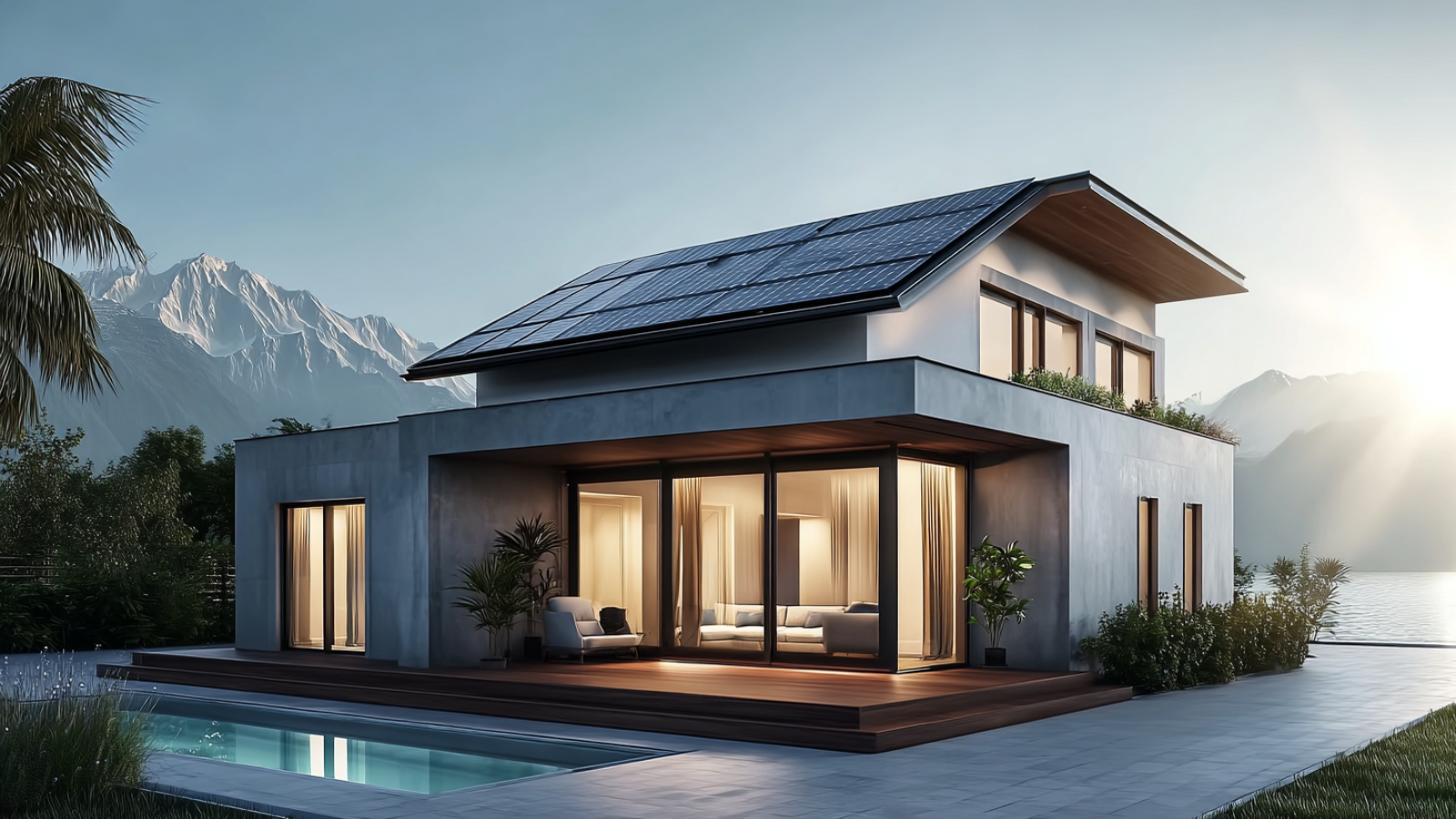
A home solar system, typically a decentralized photovoltaic system, converts sunlight into electrical energy through roof-mounted or garden-mounted panels. A complete system consists of the following core components:
Components at a Glance:
Solar panels: Convert sunlight into direct current - the energy source of the system.
Inverter: Converts direct current into household alternating current.
Battery storage: Stores surplus electricity for nighttime or cloudy days.
Control system: Monitors system operation and optimizes charging/discharging efficiency as well as safety.
The battery storage system is crucial for independence from the power grid. The system works as follows: when the sun is shining, the panels generate electricity, part of which is used directly and part of which is stored. At night or in bad weather, the battery releases energy, ensuring an uninterrupted power supply.
2. Why Solar Systems Absolutely Need Battery Storage
Solar power generation depends heavily on the time of day and weather conditions. When the sun is shining, there is often a surplus, while no energy is produced at night or during rain. Without storage, the power supply would be unstable.
Benefits of Battery Storage:
Day-night balance: Stores surplus daytime electricity for the night - power supply around the clock.
Maximize self-consumption: Greater independence from the public grid.
Backup power function: Automatic switch to battery operation during grid outages for lights, refrigerator, etc.
Off-grid operation possible: For remote locations or energy-autonomous households.
3. Five Compelling Reasons to Choose Lithium Iron Phosphate Batteries
Among all storage options, LiFePO4 batteries stand out for their maturity, stability, and safety. Their main advantages are:
The Key Benefits:
Long service life: 4,000-6,000 charging cycles (lead-acid batteries: 300-500), stable for over 10 years.
Maximum safety: Stable chemical structure - no fire risk in cases of overcharging, short circuit, or heat.
High efficiency: Over 95% charge/discharge efficiency - minimal energy loss.
Lightweight design: Only half the weight of lead-acid batteries at the same capacity - more flexible installation.
Environmentally friendly: No heavy metals, no harmful gases - ideal for households.
4. Determine Power Demand and Properly Size Your Solar System
Before installation, you should carefully analyze your power consumption to choose the right system size.
Step 1: Calculate Your Own Power Consumption
Typical household appliances and their consumption:
| Appliance | Power (W) | Daily Consumption (kWh) |
|---|---|---|
| Refrigerator | 80-150 | 1.44 |
| Lighting | 10-30 per lamp | 0.45 |
| Router | 10-30 | 0.24 |
| TV | 80-120 | 0.72 |
| Microwave | 800-1500 | 0.50 |
| Washing machine | 500-1000 | 0.60 |
| Small devices | 20-100 | 0.55 |
| Total | 4.5 |
Step 2: Properly Size the Solar System and Storage
With a daily consumption of 4.5 kWh, a storage capacity of 1.5-2 times the daily demand is recommended (6.75-9 kWh). For 2 cloudy days: 2-3 times the capacity (9-13.5 kWh).
Recommended System Sizes:
Small household: 3-5 kWp panels + 5-10 kWh storage
Large household: 6-8 kWp panels + 10-15 kWh storage
Per 1 kWh daily demand: 2 x 250W panels (500Wp). Choose 12V/24V/48V systems according to your components.
5. Important Installation Notes and System Compatibility
The installation of a solar power system requires careful planning, especially with LiFePO4 batteries.
Installation Checklist:
Match the voltage: Battery voltage (12V/24V/48V) must match the inverter and panels.
Professional installation: Dry, temperature-stable location without direct sunlight - preferably installed by qualified personnel.
Protection rating: For outdoor areas, at least IP65 (dust-tight and protected against water jets).
Wiring: Properly route sufficiently sized cables.
Battery management: BMS system for monitoring and optimization.
For best results, we recommend LiFePO4 batteries with IP65 protection and integrated BMS - ideal for home solar systems.
6. Optimize the Safety and Service Life of Your Solar System
With the right care, your components will last longer and operate more safely.
Maintenance Tips:
BMS system: Choose batteries with battery management for cell protection and temperature monitoring.
Winter operation: Below 0°C, batteries require a heating function to protect the cells.
Ventilation: Install batteries in well-ventilated areas without heat build-up.
Regular checks: Check connections, cables, and battery condition every six months.
Modern LiFePO4 storage systems with remote monitoring and cold protection offer maximum reliability for your home energy system.
7. Frequently Asked Questions (FAQ) About Solar Power Systems
Q1: Do the systems also work in cloudy weather?
Yes, provided the storage system is sufficiently sized. We recommend 20-30% reserve capacity.
Q2: Do batteries discharge when not in use?
LiFePO4 batteries have low self-discharge (<3%/month). Nevertheless, recharge them every 3-6 months.
Q3: Do I need a professional for installation?
Absolutely, especially for parallel connection, communication protocols, or inverter settings.
Q4: Is later expansion possible?
Many systems support parallel operation (usually 2-4 batteries). Important: use the same models.
8. Conclusion: Clean Energy for Your Home
Photovoltaic systems offer a clean and economical energy alternative. Choosing the right battery storage system - especially modern LiFePO4 technology - is crucial for a stable and efficient system. With the right components and professional installation, you can maximize your energy independence while protecting the environment.
Would you like to learn more about home solar power systems? Contact our experts for personal advice!
Share:
In-Depth Analysis: Temperature Behavior of LiFePO4 Batteries