





Table of Contents
- 1. The Trend on the Water: LiFePO₄ Batteries Are Becoming More Popular for Outboard Motors
- 2. What Does an Outboard Motor Start Require from a Battery?
- 3. CCA, MCA, and HCA: Key Starting Ratings for Marine Batteries
- 4. Why Not Every LiFePO₄ Battery Is Suitable for an Outboard Motor
- 5. Choosing the Right LiFePO₄ Battery for an Outboard Motor
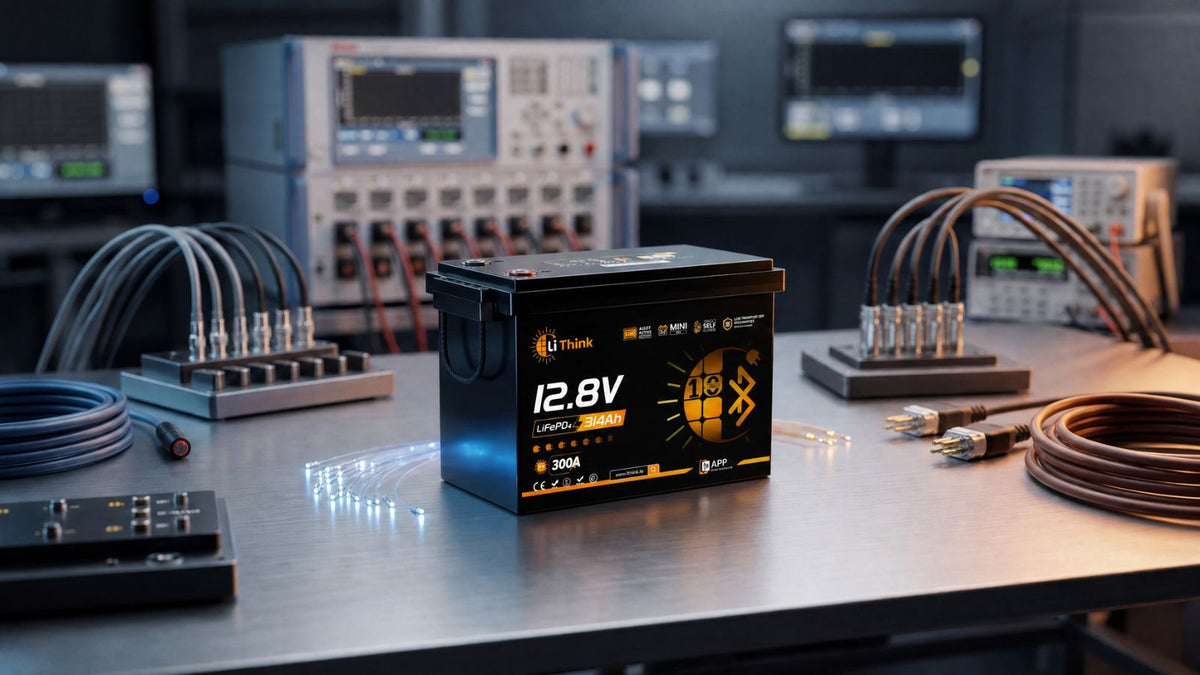
- 6. LiThink Dual-Purpose LiFePO₄ Batteries for Modern Boats
- 7. Practical Tips for Using a Battery with an Outboard Motor
- 8. Conclusion
- Frequently Asked Questions (FAQ)
Traditionally, gasoline outboard motors are usually powered by conventional lead-acid starter batteries, while trolling motors and other onboard systems increasingly use LiFePO₄ batteries. The key difference lies not only in battery capacity, but in the combination of sufficient starting-current capability, a suitable BMS system and a protection design optimized for marine applications.
This article explains the requirements of starting a gasoline outboard motor and when a LiFePO₄ battery can be a suitable solution.
1. The Trend on the Water: LiFePO₄ Batteries Are Becoming More Popular for Outboard Motors
Marine batteries have traditionally used lead-acid technology, including AGM, gel, and conventional starter batteries.
These battery types are well-established and have proven effective for engine starting. However, their limitations are becoming more apparent on modern fishing and recreational boats.
1.1 Onboard Power Requirements Are Changing
In the past, a small boat mainly needed power for:
- Starting the gasoline outboard motor
- Basic lighting
Today, many boats also carry a range of electronic devices:
Modern Marine Electronics Need a Stable Power Supply
- Trolling motor
- Sonar and fish finder
- GPS navigation
- Marine speakers
- Smartphones and cameras
- Other marine electronics
As a result, modern boat owners expect more than a battery that can start the engine. They also want:
- Longer operating time
- Stable power for multiple devices
- Lower weight
- Easier installation
This is why LiFePO₄ marine batteries are becoming increasingly popular.
1.2 What Are the Advantages of LiFePO₄ over Lead-Acid Batteries?
Lower Weight
For the same usable capacity, LiFePO₄ batteries are significantly lighter than conventional lead-acid batteries.
On small fishing boats and kayaks, saving several kilograms can offer the following benefits:
- Improved handling on the water
- Easier handling
- More flexible installation options
More Usable Capacity
Lead-acid batteries generally should not be discharged much below about 50% during normal use, as deeper discharge can significantly shorten their service life.
LiFePO₄ batteries, by contrast, allow a much larger portion of their stored energy to be used.
Example:
- 100Ah lead-acid battery: approximately 50Ah of usable capacity for long-term use
- 100Ah LiFePO₄ battery: a significantly greater proportion of usable energy
As a result, a LiFePO₄ battery can provide longer practical runtime than a lead-acid battery with the same rated capacity.
Longer Service Life
Marine batteries are often charged and discharged repeatedly, left unused for extended periods between seasons, and still expected to perform reliably.
LiFePO₄ technology offers greater cycle life, making it particularly suitable for regular boating and fishing applications.
2. What Does an Outboard Motor Start Require from a Battery?
Many people focus mainly on capacity when choosing a battery:
100Ah, 150Ah, or 200Ah?
However, capacity is not the most important factor when starting a gasoline outboard motor.
Starting an engine and powering a trolling motor place very different demands on a battery.
2.1 Engine Starting Requires Very High Current for a Short Time
When starting a gasoline outboard motor, the starter motor draws a large amount of current for a few seconds.
The battery must deliver high power quickly so that:
- The starter motor operates reliably
- The engine reaches the required cranking speed
- The ignition system operates reliably
Important:
For engine starting, short-term high-current capability matters most—not just stored capacity.
2.2 A Trolling Motor Has Different Power Requirements
A trolling motor operates differently from a starter motor.
While fishing, it often needs a stable power supply over an extended period:
- Slow cruising
- Holding position
- Continuous speed adjustment
Different battery characteristics matter here:
| Application | Key Battery Requirement |
|---|---|
| Starting a gasoline outboard motor | High short-term starting current |
| Trolling motor | Long runtime and stable discharge |
| Sonar/GPS | Stable low-current power supply |
This is why conventional starter batteries and deep-cycle batteries are designed for different purposes.
3. CCA, MCA, and HCA: Key Starting Ratings for Marine Batteries
To determine whether a LiFePO₄ battery is suitable for starting a gasoline outboard motor, you need to understand several important ratings.
Ah capacity alone is not enough to assess a battery’s starting capability. Short-term current output and suitability for marine applications are especially important.
3.1 CCA (Cold Cranking Amps): Cold-Starting Capability
CCA measures a battery’s ability to deliver high starting current at low temperatures.
This rating is mainly used to evaluate starting performance in cold conditions, such as:
- Winter operation
- Cold mornings
- Low ambient temperatures
For boat owners who often fish in autumn or winter, a strong CCA rating is especially important because the battery must start reliably in low temperatures.
3.2 MCA (Marine Cranking Amps): A Relevant Rating for Boats
MCA was developed for marine applications and measures a battery’s starting-current capability under typical boating conditions.
Because boats are not usually exposed to the same extreme cold as land vehicles, MCA testing conditions differ from CCA testing conditions.
Why MCA Is Particularly Relevant for Outboard Motors
For gasoline outboard motors, MCA often better reflects actual operating conditions on the water.
When choosing a marine starting battery, pay close attention to this rating as well as capacity.
3.3 HCA (Hot Cranking Amps): Starting Performance at High Temperatures
HCA measures a battery’s ability to deliver high starting current at elevated temperatures.
This rating can be particularly relevant in summer, for example when:
- The boat has been sitting in the sun for an extended period
- The engine is restarted after a break
- Ambient temperatures are high
For marine applications, CCA, MCA, and HCA together provide useful information about a battery’s starting capability.
4. Why Not Every LiFePO₄ Battery Is Suitable for Starting a Gasoline Outboard Motor
This is one of the most common areas where users make incorrect assumptions.
Many people assume:
“A large LiFePO₄ battery can automatically start any outboard motor.”
However, this assumption is incorrect.
4.1 High Capacity Does Not Automatically Mean High Starting Power
The unit Ah only describes how much energy a battery can store.
Engine-starting capability, by contrast, depends on how much current the battery can deliver and how quickly it can deliver it.
Example:
- A 165Ah battery can store a large amount of energy.
- However, if the BMS limits maximum output current, the battery may still be unsuitable for starting an engine.
Key Difference
Capacity: How much energy can be stored.
Starting current: How much power can be delivered over a short period.
4.2 Standard Deep-Cycle LiFePO₄ Batteries Are Designed for a Different Purpose
Many LiFePO₄ batteries are designed primarily for the following applications:
- RVs
- Solar energy storage
- Stationary energy systems
- Marine auxiliary power
These batteries are primarily optimized for:
Typical Design Priorities of Deep-Cycle LiFePO₄ Batteries
- Long discharge periods
- High cycle life
- Stable continuous output
- Efficient energy storage
A starting battery, however, needs additional characteristics:
- Very low internal resistance
- High short-term current output
- Fast response to load demand
- A BMS that allows high current output
For this reason, a standard LiFePO₄ battery should not replace a conventional starter battery without first verifying compatibility.
5. Choosing the Right LiFePO₄ Battery for an Outboard Motor
If a LiFePO₄ battery is to start a gasoline outboard motor, it must be designed specifically for marine and high-current applications.
Several factors are important in making the right choice.
5.1 Sufficient Starting-Current Capability
The first consideration is the current the battery can deliver during engine starting.
Before purchasing, check the following:
- Outboard motor manufacturer requirements
- MCA/CCA/HCA ratings
- Maximum continuous and peak discharge current
Do Not Focus on Capacity Alone
A higher Ah rating does not automatically mean better starting performance. The cells, BMS, and current ratings must work together.
5.2 High-Performance Battery Cells
Engine starting places high demands on individual battery cells.
Suitable cells offer:
- Low internal resistance
- Fast current delivery
- Stable voltage under high loads
High-quality cell selection helps reduce:
- Voltage drops during starting
- Heat generation
- Risks associated with overloading
5.3 A BMS Designed for High Current
The battery management system (BMS) is a key component of every LiFePO₄ battery.
It monitors and protects the battery against conditions including:
- Overcharging
- Over-discharging
- Overcurrent
- Short circuits
- Overtemperature
For starting applications, however, the BMS must also allow high current to flow during engine cranking.
Requirements for a Marine Starting BMS
- High short-term current capability
- Fast response to changing loads
- Reliable protection in marine conditions
6. LiThink Dual-Purpose LiFePO₄ Batteries for Modern Boats
A modern marine battery may need to perform several tasks:
Engine Starting
To start a gasoline outboard motor, the battery needs:
- High short-term current output
- Reliable engine starting
Trolling Motor Power
While fishing, the battery must:
- Provide long runtime
- Deliver stable power
- Support precise speed control
Powering Electronic Devices
Other commonly powered devices include:
- Sonar
- GPS
- Boat lighting
- Mobile devices
This is exactly where the advantage of a dual-purpose LiFePO₄ battery lies: it combines high starting power with the benefits of a deep-cycle battery.
This can reduce the number of batteries needed, especially on smaller boats with limited space:
- Lower weight
- Less wiring
- Easier installation
7. Practical Tips for Using a Battery with an Outboard Motor
7.1 Check the Outboard Motor Requirements
Before purchasing, check the requirements of the gasoline outboard motor you use.
Check Before Choosing a Battery:
- Outboard motor model and power
- Recommended starter battery specifications
- Required MCA/CCA ratings
- Maximum starting current required
The battery must meet the motor manufacturer’s requirements. Sufficient capacity alone does not guarantee reliable starting performance.
7.2 Check Charging-System Compatibility
Several power sources may be used to charge a boat battery:
- Outboard motor charging system
- Onboard charger
- Solar system
Before installation, make sure that:
Important Charging Considerations
- The charging voltage is suitable for the LiFePO₄ battery
- The charger uses an appropriate LiFePO₄ charging profile
- The charging current stays within the battery’s specifications
7.3 Consider the Marine Installation Environment
Boats place special demands on battery systems. Compared with land vehicles, marine batteries are continually exposed to:
- Moisture
- Saltwater and salt spray
- Vibration while underway
- Temperature fluctuations
Safe Installation Is Essential
The battery should be:
- Protected against water and dust
- Securely mounted
- Connected using appropriately sized cables
- Protected from mechanical damage
8. Conclusion
Not every standard deep-cycle lithium battery is suitable for engine starting. What matters is whether the battery is specifically designed for high starting currents and marine applications.
For modern fishing boats, a dual-purpose LiFePO₄ battery can be a particularly useful solution.
It combines the ability to start a gasoline outboard motor with the capacity to power a trolling motor, sonar, and other onboard electronics over time.
This can make the onboard power system simpler, lighter, and more efficient, better meeting the needs of modern boat owners.
Frequently Asked Questions (FAQ) About LiFePO₄ Batteries for Outboard Motors
Q1: Can all LiFePO₄ batteries start a gasoline outboard motor?
No. Conventional deep-cycle LiFePO₄ batteries are designed primarily for energy storage. To start an outboard motor, a battery must provide sufficient starting current and have a suitable BMS.
Q2: Does a larger battery capacity automatically mean higher starting power?
No. Ah capacity only describes the amount of stored energy. Starting performance depends mainly on short-term current output, cell technology, and the BMS.
Q3: Can a dual-purpose LiFePO₄ battery also power a trolling motor?
Yes. If the battery is specifically designed as a dual-purpose model, it can deliver high starting current and provide ongoing power for a trolling motor and onboard electronics.
Q4: Is it safe to use a LiFePO₄ starting battery in winter?
Yes, provided the battery has suitable protection features. Models with low-temperature protection or built-in self-heating can improve safety in cold conditions.
Q5: Why is the IP rating important for marine LiFePO₄ batteries?
Boats are often exposed to water, moisture, and salt spray. An appropriate IP rating helps protect the battery from environmental exposure and supports long-term reliability.

Share:
LiFePO4: Is a Large Cell Voltage Difference During Charging Normal?