




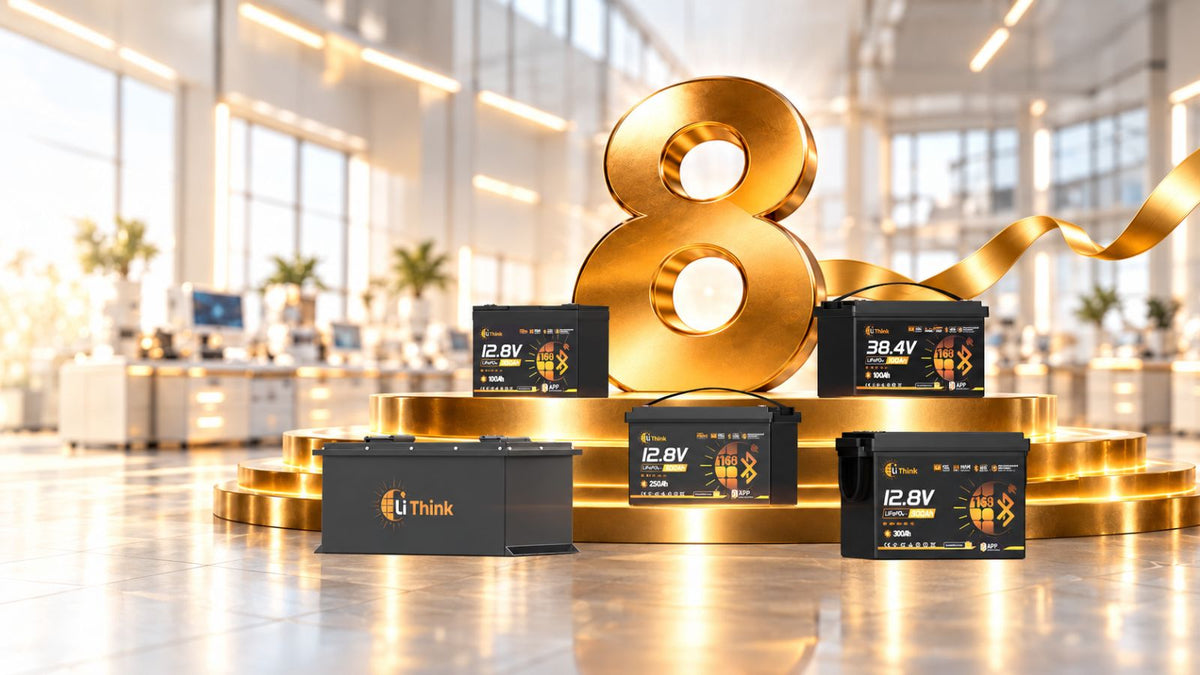
For eight years, LiThink Lab has stood for systematic testing, continuous development, and a clear focus on the safety of LiFePO₄ energy systems.
As we celebrate our 8th anniversary, we look back on a journey shaped by laboratory work, technical testing, and controlled manufacturing. For us, progress is not only about higher capacity or more power. What matters is ensuring that every new development performs reliably under real-world and demanding conditions.
Eight years of development, testing, and continuous improvement — guided by one principle that has remained unchanged: Li Energy, Think Safety.
1. 8 Years of LiThink Lab — A Special Milestone
For us, an anniversary is more than a number. Eight years of LiThink Lab represent thousands of hours of development, repeated testing, technical improvements, and one ongoing question: How can we make a battery system even more stable, safer, and more reliable?
LiThink develops energy storage solutions for a wide range of applications — from RVs and marine or trolling motor systems to off-grid and solar installations.
What connects all of these applications is one common requirement: energy must be available when it is needed.
Improve Technology
New products are developed not only around capacity, but as complete battery systems.
Test the Limits
Electrical, thermal, and mechanical stresses are evaluated under controlled conditions.
Apply Standards
Requirements defined in the laboratory must be implemented consistently in series production.
Keep Improving
Test data, technical results, and real-world experience continuously feed into future development.
A good battery is not defined by a single test. What matters is a development process in which cell quality, electrical safety, mechanical construction, manufacturing, and final inspection work together.
2. How LiThink Lab Defines Quality
A LiFePO₄ battery must handle changing loads, temperature variations, vibration, and repeated charging and discharging in everyday use.
That is why quality control at LiThink goes far beyond a simple voltage measurement. In the laboratory, battery systems are evaluated from multiple perspectives — from electrical performance and temperature behavior to mechanical durability and service life.

The goal is not only to determine whether a battery works. We also need to understand how consistently it performs under stress, how individual components behave, and whether the protection systems respond reliably.
Laboratory results provide technical data that can be used to evaluate and improve battery designs. In this way, every individual test becomes part of an ongoing development process.
3. 11 Core Tests for Safety and Reliability
A battery experiences much more in real life than constant room temperature and a steady load. That is why LiFePO₄ battery systems are tested under a variety of electrical, mechanical, and environmental conditions.
The testing program covers eleven core areas.
Repeated charging and discharging cycles help evaluate capacity retention and long-term behavior.
Evaluates system behavior and the response of protection functions under electrical fault conditions.
Examines charging, discharging, and protection behavior under different temperature conditions.
Simulates mechanical stress such as that experienced in RVs or during long-distance transportation.
Evaluates the housing, electrical connections, and internal components after defined mechanical impacts.
Tests the resistance of the system to short-term mechanical impact.
Evaluates the resistance of materials and components to corrosive environmental conditions.
Simulates changing climatic conditions and evaluates system stability.
Combines typical stresses that may occur during storage and transportation.
Tests structural stability under increased mechanical pressure.
Evaluates the behavior of key components under demanding thermal conditions.
Safety cannot be defined by a single measurement. Different stress scenarios reveal how cells, connections, electronics, housing, and protection systems behave together as one complete battery system.
4. From Laboratory Testing to Series Production
A good laboratory result is only the first step. It is equally important that defined quality standards can be implemented reliably and consistently in series production.

LiThink connects development, testing, and manufacturing. Production processes, assembly, and quality control follow defined technical requirements.
Before a battery leaves production, it is tested. This helps ensure that not only development samples, but also finished production batteries meet the intended quality requirements.
What is developed and validated in the laboratory must also be implemented consistently in series production. That is why we do not treat laboratory testing and manufacturing as separate processes.
5. 8 Years of LiThink Lab — Anniversary Offers
We want to celebrate eight years of LiThink Lab together with our community. That is why selected LiThink LiFePO₄ batteries are available at special anniversary prices.
LiThink Lab · 8th Anniversary Sale
Anniversary Prices + Extra Promotional Discount
Discover selected LiThink batteries at special anniversary prices.
Use discount code LAB6 for an additional promotional discount during the anniversary campaign.
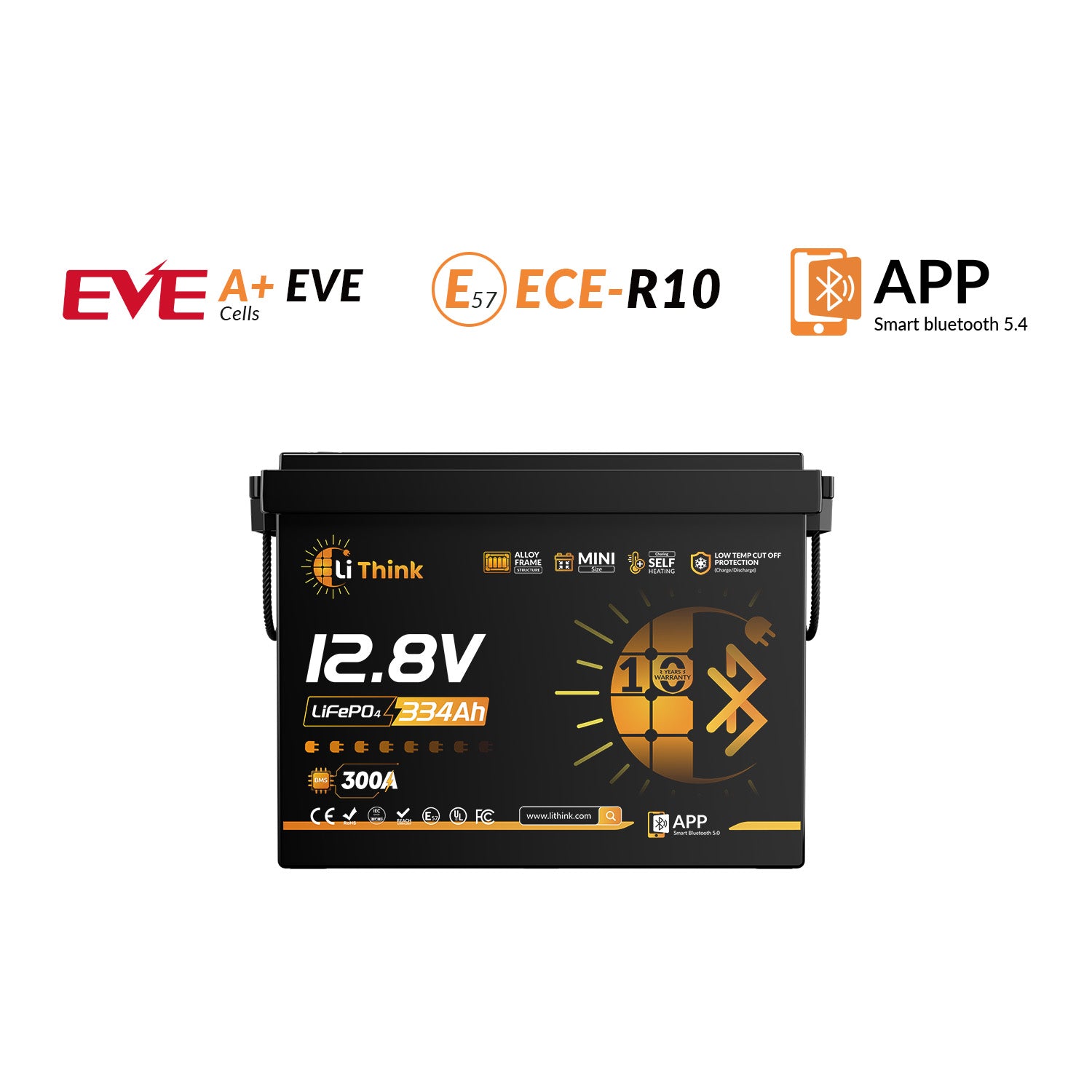
12V 334Ah Mini Pro Smart
- 334Ah / 4,275.2Wh
- EVE LF334 LiFePO₄ Cells
- 300A Smart BMS
- Bluetooth Smart Monitoring
- Automatic Self-Heating
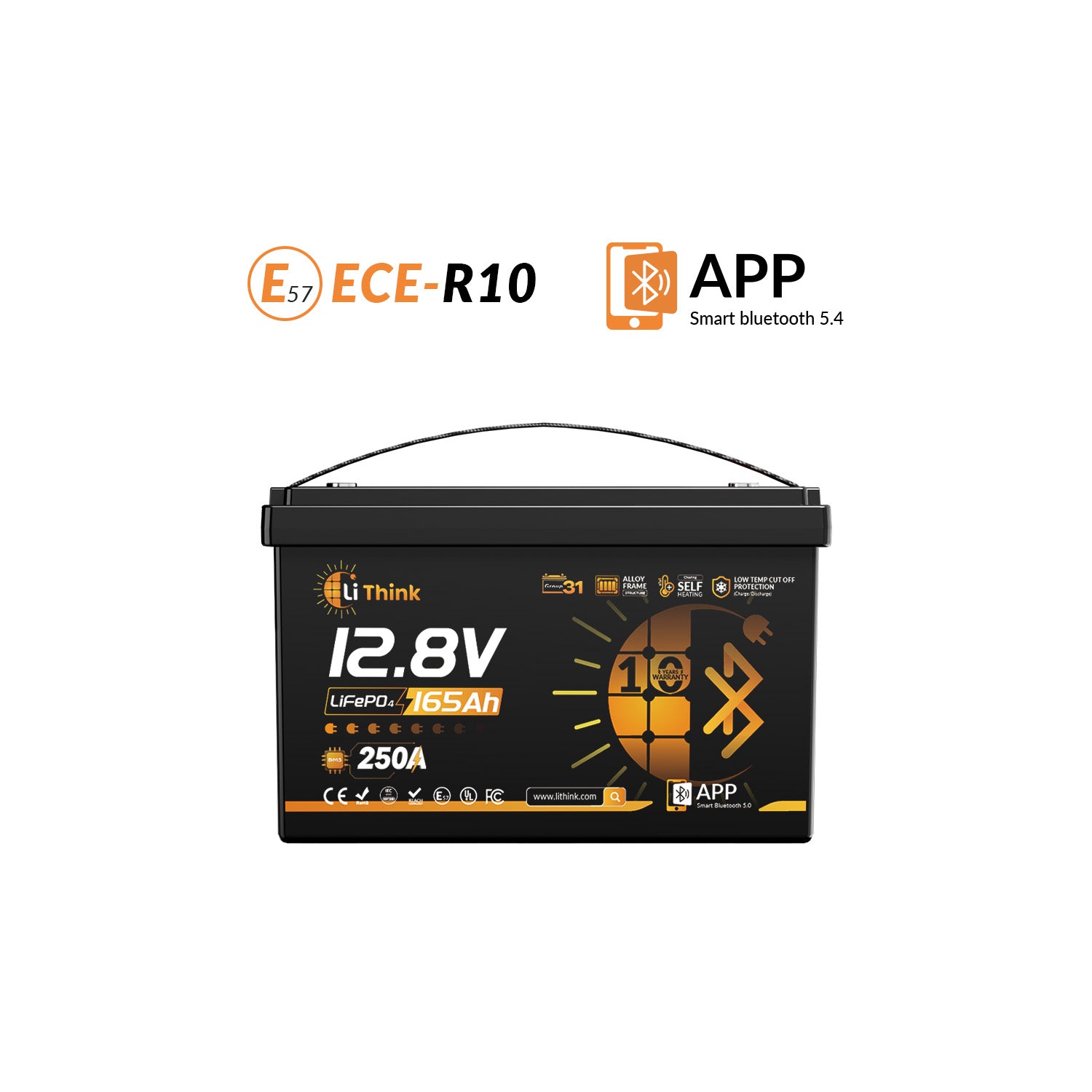
12V 165Ah Smart
- 165Ah / 2,112Wh
- 250A Smart BMS
- Bluetooth Smart Monitoring
- Automatic Self-Heating
- Built for RV, Marine and Off-Grid Use
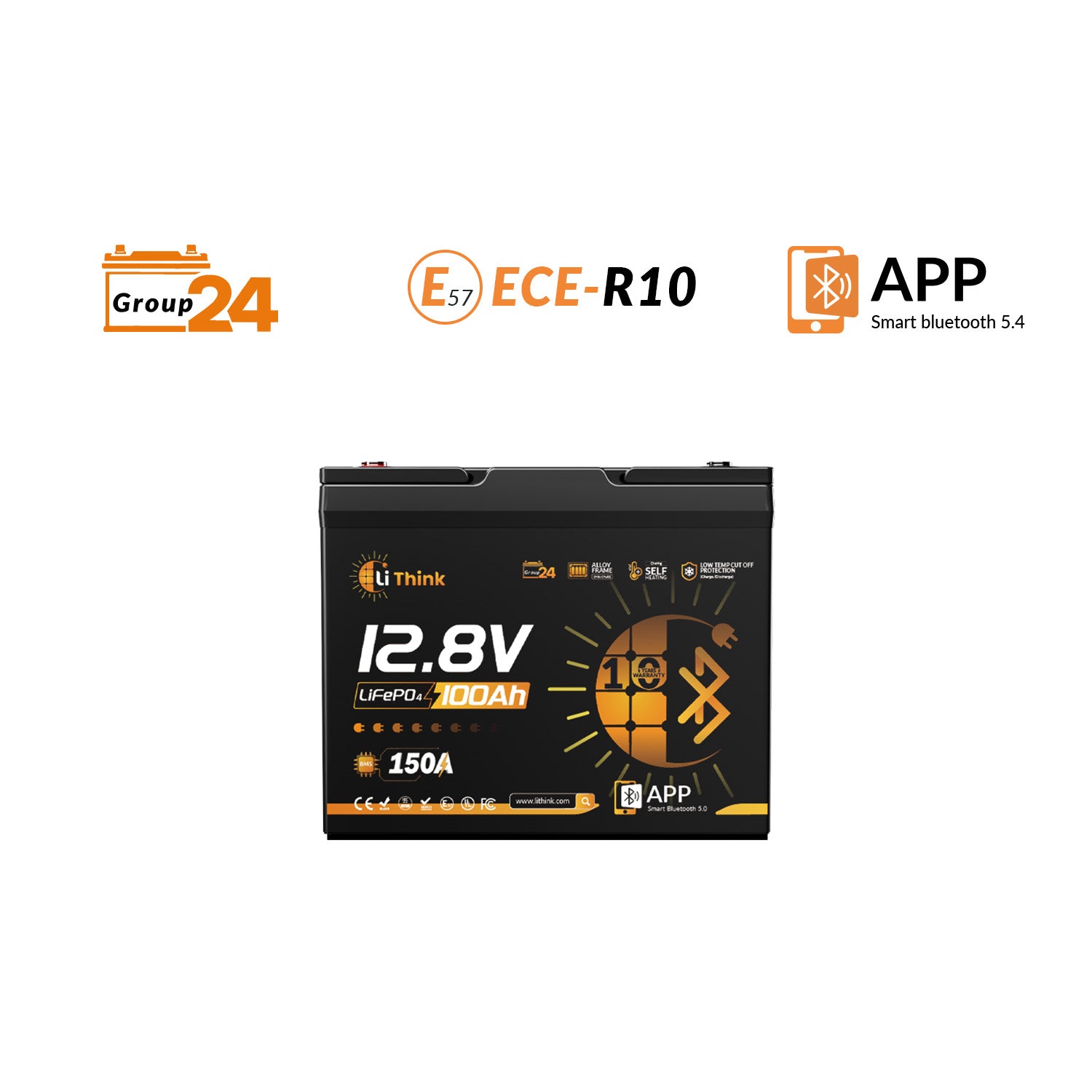
12V 100Ah Group 24 Smart
- 100Ah / 1,280Wh
- 150A Smart BMS
- Group 24 Size
- Bluetooth Smart Monitoring
- Automatic Self-Heating
Use discount code LAB6 during the LiThink Lab anniversary promotion. Product availability, promotional pricing, and applicable discounts are subject to the current conditions shown in the LiThink US online store.
6. Thank You for 8 Years of Trust
Eight years of LiThink Lab would not have been possible without the people behind our brand.
Our thanks go to the engineers and team members who work on new battery systems every day, to our partners and testers who use our products under real-world conditions, and most importantly to our users, whose experience and feedback continue to support our development.
This anniversary is not only a look back. It is also motivation to continue improving our development and testing processes and to build reliable energy systems for RV, marine, and off-grid applications.
Thank you for eight years of trust in LiThink Lab.

Share:
What Battery Do You Need for a 55lb, 70lb or 80lb Trolling Motor?
LiFePO4: Is a Large Cell Voltage Difference During Charging Normal?